Who can call a double bounce in pickleball?
Think an opponent let the ball bounce twice? Learn who makes the call without a referee, when to raise it, and why disagreement does not mean an automatic replay.
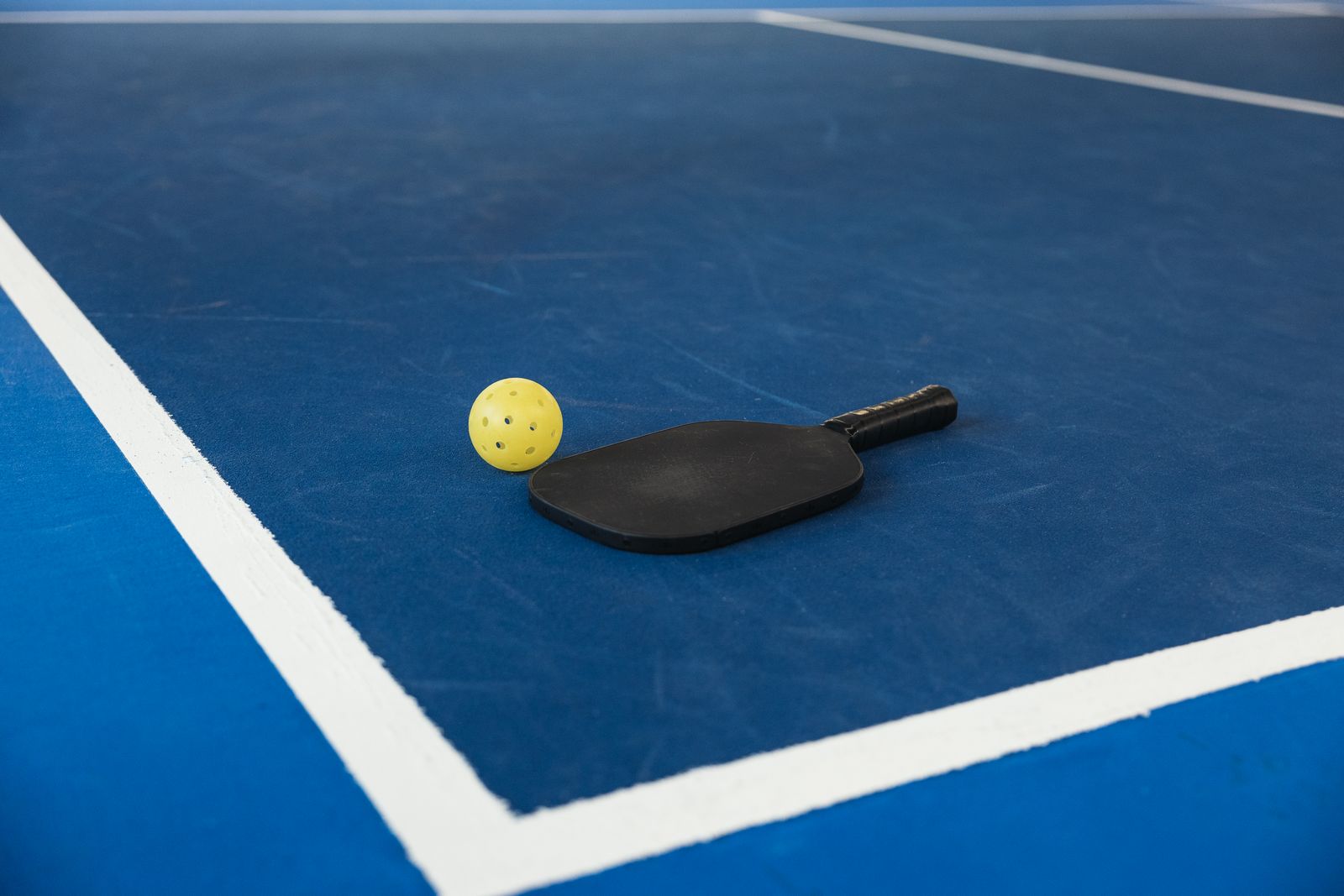
Without a referee, you can mention a suspected double bounce to your opponent after the rally, but you cannot enforce that fault on them. Players are expected to call faults on themselves or their partner. The player accused of the fault has the final decision under USA Pickleball rules 9.B.2 and 9.B.4.
This guide uses the 2026 USA Pickleball rules for standard standing play without an official. If an opponent's pickup looks late, keep playing and raise it when the rally ends. Do not stop to award yourself the rally.
Double bounce versus the two-bounce rule
A double bounce means the ball bounces twice on one end before the player returns it. That is a fault in standard standing play under rule 10.B.1. The two-bounce rule is different: the serve must bounce before the receiver hits it, and the return must bounce before the serving team hits it. See rules 10.A and 10.B.
Our pickleball rules guide explains those opening shots. The pickleball glossary covers terms such as fault and volley.
Call your own double bounce, including your partner's
If you or your partner let the ball bounce twice before returning it, call the fault promptly. Rule 9.B.2 expects you to speak up even if the opponent says nothing.
A useful doubles habit is to agree before playing that either partner will speak up. Saying "That bounced twice on our side" makes the call clear without waiting for someone across the net to raise it.
A close pickup: Alex and Casey disagree
Imagine Alex hits a short ball. Casey reaches forward and scoops it back. Alex thinks it touched the court twice before Casey's paddle arrived, but Casey keeps playing.
Alex continues the rally. Once it ends, Alex asks, "Did that bounce twice before your pickup? I thought I saw a second bounce."
If Casey agrees it bounced twice, Casey acknowledges the fault and loses that rally. If Casey says the paddle reached it after one bounce, Alex cannot impose the fault or demand a replay. Rule 9.B.4 leaves that decision with Casey.
Alex can name the shot: "The short ball near your right foot." That gives Casey something specific to answer. Repeating "It was obvious" gives Casey less to work with.
Keep the question about that pickup. Asking Casey to describe what happened is more useful than opening with an accusation of cheating.
Why disagreement does not automatically mean a replay
Rule 9.B.3 allows players to call an opponent's non-volley zone faults and service foot faults. Its subsection 9.B.3.b requires a replay when the teams disagree about those calls. A double-bounce allegation belongs under 9.B.4, so that replay provision does not apply. See the fault-call rules together.
When discussing a disputed pickup, name the fault first. "We disagree, so replay it" skips the distinction that determines which rule applies.
What to do if it keeps happening
In a non-officiated tournament, rule 24.C lets any player request a referee or Tournament Director for repeated suspected violations or an issue the players cannot quickly resolve. See section 24.
For a recreational session, try speaking to the organizer between games. Explain which shot caused the disagreement and ask for help agreeing on how the group will handle it next time. This is a practical suggestion for managing the session.
Wheelchair play and eligible adaptive standing play have qualified two-bounce allowances. Check rule 25.A.9 and rule 25.B.3 before applying this standard-play example to those formats.
Your next match
Ready to improve your game?
Download Racketly for iOS, Apple Watch or Android and start tracking your matches today.
Choose your Racketly download or read the match tracking guide.