Pickleball rules: serving, kitchen and doubles scoring
Start your first game with the serving, bounce and kitchen rules, then follow a doubles scoring example that explains 0-0-2 and who serves next.
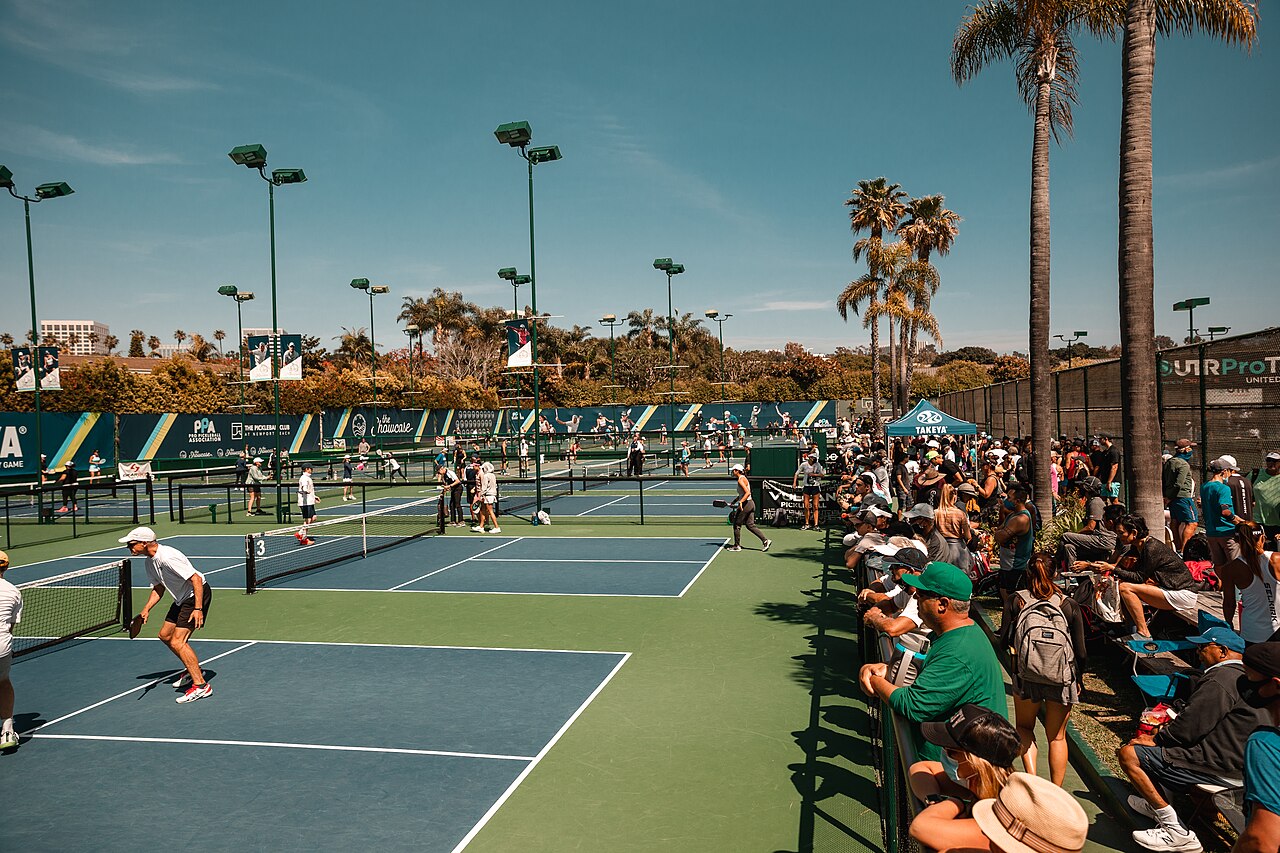
To play pickleball, serve diagonally, let the serve and return each bounce, and volley only from outside the kitchen. In standard side-out scoring, only the serving side scores, usually in a game to 11 with a two-point winning margin. At 10-10, play continues until someone leads by two. USA Pickleball rules summary
This guide follows the 2026 USA Pickleball rules for standard standing play, mainly doubles. Agree on the format before playing, since competitions can use different rules. If you are comparing sports, our padel vs pickleball comparison covers the broader differences.
Pickleball serving rules
Serve from behind the baseline into the diagonally opposite service court. Keep at least one foot grounded in the correct serving area at contact. Neither foot may touch the baseline, the court, or the ground beyond the imaginary extensions of the centerline and sideline. You normally get one serve attempt, rather than tennis's two. USA Pickleball serving summary
Volley serve or drop serve?
For a volley serve, hit the ball before it bounces. At contact, your paddle must move in a clear upward arc. The ball must be no higher than your waist, and the top of the paddle head no higher than the top of your wrist joint. A low contact point alone does not make a flat swing legal. 2026 rule changes, entry 23
For a drop serve, release the ball from a natural, unaided height and hit it after it bounces. Do not throw it up, push it down or propel it sideways. The volley serve's upward-arc, wrist and contact-height requirements do not apply to the drop serve. 2026 rulebook, section 7.D
For either serve, the receiver must be able to see the release. Do not deliberately add spin as you release the ball; natural rotation is allowed. You may add spin with the paddle at contact. 2026 rule changes, entry 15
Where the serve must land
The serve must clear the kitchen and its line. The centerline, sideline and baseline of the correct diagonal service court count as in; the kitchen line is the exception. A serve that clips the net and lands legally stays in play. 2026 rulebook, sections 7.E and 8.B-8.C
A serve on the centerline beyond the kitchen is in. One on the kitchen line is a serving fault, with no automatic second attempt.
The two-bounce rule: one bounce on each side
The receiver must let the serve bounce before returning it. The serving team must then let that return bounce before hitting it. After those two bounces, either side may volley, which means hitting the ball before it bounces, provided the kitchen rules allow it. USA Pickleball two-bounce rule
Alex serves to Casey, who waits for the bounce and returns deep to Alex's partner, Bea. Bea must also wait for a bounce. Casey's team can then volley Bea's shot. If Bea takes the return out of the air, Alex and Bea lose the rally.
The two bounces happen on opposite sides. A standing player cannot let a shot bounce twice before returning it.
Pickleball kitchen rules
The kitchen is the non-volley zone within seven feet of the net on each side. Its boundary line is part of the zone. You may enter it to play a ball that has bounced. You may also stand there while the ball is elsewhere. USA Pickleball non-volley zone summary
You cannot volley while touching the kitchen or its line. Your volley momentum also cannot carry you into the zone, even after the ball is dead. After entering the kitchen, establish both feet on the playing surface completely outside it before your next volley. 2026 rulebook, section 11.A
- A short shot bounces in the kitchen. You step in and hit it after the bounce. That is legal.
- You volley with a toe on the kitchen line. That is a fault, even if most of your foot is behind it.
- You volley a winner, then stumble into the kitchen because of that shot's momentum. That is still a fault.
- You step into the kitchen, jump backward and volley while airborne. That is a fault because both feet did not first reestablish contact outside the zone.
Leave room to finish your volley in balance. The step after the shot can cost you the rally.
Pickleball rules for doubles scoring and serving order
Call three numbers before serving: your team's score, the opponents' score, then your server number. At "4-3-2," the serving team leads 4-3 and its second server is serving. USA Pickleball doubles scoring guide
In a normal service rotation, the correctly positioned player on the right serves first. Winning a rally earns the serving team a point; the same player serves again from the other side. The partners exchange sides after each point they score. When the first server's team loses a rally, the partner serves from their current correct side. Losing on the second server causes a side out: the other team gets the serve. The receiving team does not exchange sides after each rally. USA Pickleball service sequence
The game starts at "0-0-2." Only the opening server serves before the first side out. After that exception, each team gets its normal two-server rotation. Server 1 and server 2 describe the order during that turn; either partner can be server 1 on a later turn. USA Pickleball opening-server explanation
A worked example starting at 0-0-2
Alex and Bea play Casey and Drew. Alex and Casey begin on their teams' right sides.
| What happens | Next serve |
|---|---|
| Alex starts the game from the right. | Alex calls 0-0-2. |
| Alex and Bea win the rally. They exchange sides. | Alex serves from the left at 1-0-2. |
| Alex and Bea lose the next rally. The opening exception causes a side out. | Casey serves from the right at 0-1-1. Bea does not serve yet. |
| Casey and Drew win a rally and exchange sides. | Casey serves from the left at 1-1-1. |
| Casey and Drew lose the next rally. They stay on their current sides. | Drew serves from the right at 1-1-2. |
| Drew's team loses. It is a side out. | Bea, now on Alex and Bea's right, serves at 1-1-1. |
| Bea's team loses its next rally. The score stays 1-1. | Alex serves from the left at 1-1-2. |
Bea becomes server 1 when the team gets the ball back, although Alex served first in the game.
For serving and receiving positions, remember who started on the right for each team. That player belongs on the right at an even team score and on the left at an odd one. During the rally, partners can move around their end of the court. 2026 rulebook, sections 5.B.3-5.B.4
Singles and rally scoring are different formats
In standard singles, call only the server's score and receiver's score. Serve from the right when your score is even and from the left when it is odd. Losing a rally while serving immediately passes the serve to your opponent; there is no partner's turn. USA Pickleball singles scoring guide
The 2026 USA Pickleball rulebook also includes a provisional rally scoring option. Each rally earns a point, including for the receiving side. Its doubles version uses one server per team turn and a two-number score call. Check which format your club or competition uses before applying the 0-0-2 system. 2026 rulebook, section 14.A
Common faults and a first-game check
Hitting out, failing to return a ball before its second bounce, volleying too early, or making an illegal kitchen volley loses the rally. Touching the net while the ball is live is also a fault. In standard side-out scoring, losing while receiving gives the serving team a point; losing while serving ends that server's turn or causes a side out. USA Pickleball faults summary
Before playing, agree on side-out or rally scoring and the target score. Choose the opening server and remember who starts on the right for each team. Say the score before each serve, and check any uncertainty about the next server or position before hitting the ball.
Your next match
Ready to improve your game?
Download Racketly for iOS, Apple Watch or Android and start tracking your matches today.
Choose your Racketly download or read the match tracking guide.