Padel rules explained: serving, walls and common faults
Check padel rules for serves, returns, walls, fencing and net touches. Use match examples, compare scoring formats and know when to change ends.
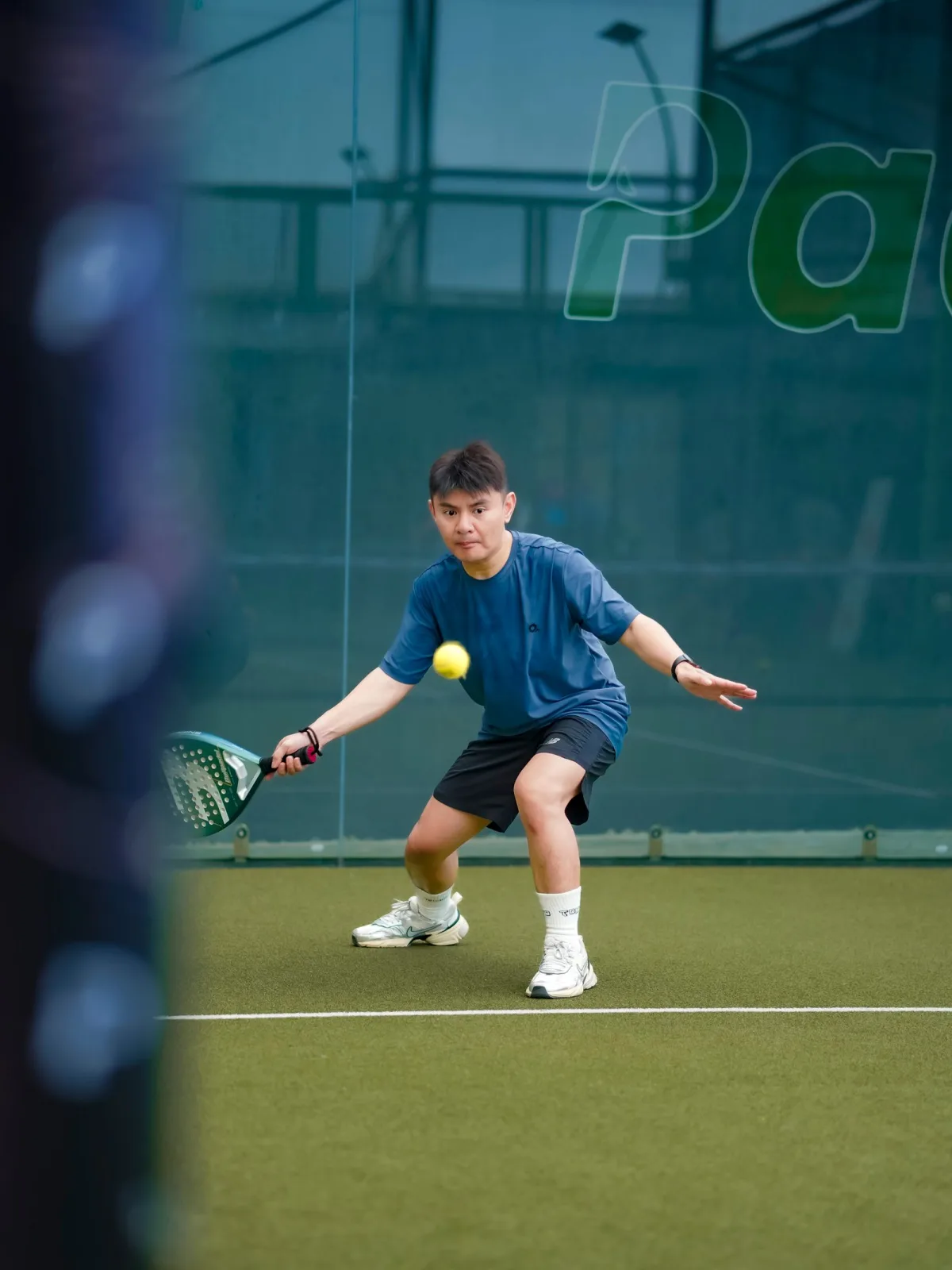
Padel normally uses doubles, a bounced underarm serve and points counted as love, 15, 30, 40. You must let a serve bounce before returning it. During a rally, a valid ball can rebound from a wall, but you must return it before its second floor bounce.
When a call is unclear, check what the ball touched and when. The FIP Rules of Padel govern the game; confirm the format for your event. If you need the court and equipment basics first, start with what is padel?.
Serve diagonally after a bounce
Start each game from the right. Bounce the ball behind the service line in the correct serving area, then strike at or below waist height with at least one foot grounded. Keep your feet off the service line and the imaginary centre-line extension. Alternate serving sides after each point.
A first-service fault leaves a second serve. Two consecutive faults lose the point. A serve landing on a line bounding the correct service box is in, provided the rest of the serve is legal. Our padel serve rules cover the setup and fault details.
Check what happens after the bounce too. The LTA rules overview distinguishes a serve that lands correctly and rebounds from glass from one that then hits the metal fence. Fence contact before the second floor bounce is a service fault.
For a net-cord serve that then bounces, replay it if it lands in the correct box and avoids the fence before its second bounce. Landing outside the box or reaching the fence before that second bounce is a fault. A first-serve let repeats the first serve; a second-serve let repeats only the second.
Return the serve after it lands
You cannot volley a serve. The receiver must wait for its bounce in the service box, then return before the second floor bounce. Once that return is in play, normal volleying is allowed. See our padel return-of-serve guide for glass and receiving examples.
Each receiving pair fixes its receiving order for the set. You cannot swap the designated receivers halfway through the set to face a different server. That restriction concerns receiving order, not a requirement to stay on one side throughout every rally. You can choose a new order for the next set.
Walls and fencing: check the contact sequence
In an ordinary rally, the LTA explains that a ball landing in court can rebound from glass or fence and stay live. Return it before its second floor bounce. A shot hitting your opponents' wall or fence before landing on their court is out.
Compare these two situations. Your shot lands inside the opponents' court and reaches the side fence: the rally continues. Your serve lands in the correct service box and reaches that fence before a second bounce: service fault. Check whether it was a serve or a rally shot before making the call.
You may also return a ball via your own glass, provided it then lands correctly on the opponents' court. Hitting your own metal fence with your return loses the point. Our glass-defence guide covers reading rebounds rather than rule exceptions.
Net contact and reaching across
You lose the point if you, your racket or something you wear or carry touches the net while the ball is live. A volley that looks unreachable can still be live when you brush the net. FIP's officiating explanations describe this live-ball touch penalty.
On an ordinary volley, contact the incoming ball on your side. Your racket can follow through across the net after legal contact, as the Canadian federation FAQ explains. There is a specific exception for returning a ball that has already bounced on your side and travels back over the net. Our padel net rules explain that exception and the remaining contact restrictions.
Other ways to lose the point
The FIP foul-shot and touch guidance helps distinguish a racket return from these faults:
- A live ball hits your body, clothing or something you carry other than the racket.
- Both partners hit the ball, together or one after the other, during the same return.
- You throw the racket to hit the ball rather than holding it at contact.
You cannot save a ball by hitting it after its second floor bounce. Keep the racket's safety cord around your wrist during play, as required by FIP.
Agree the scoring format before playing
Points win games, then games win sets. A standard set is usually first to six games with a two-game lead, with a tie-break at 6-6. A normal seven-point tie-break must also be won by two points: 7-6 in tie-break points is not enough.
At 40-40, use the selected deuce format:
- Advantage: a pair needs two consecutive points from deuce to win the game.
- Golden Point: the next point decides the game.
- Star Point: there are up to two advantage chances; if neither finishes the game, a deciding point follows.
Do not assume every 2026 club or competition match uses the same method. The LTA's 2026 organiser guide distinguishes mandatory Star Point at Grades 1 and 2 from optional use at Grades 3 to 5. Events can also use different set or deciding-set formats. Our padel scoring guide has worked examples and the deciding-point receiving restrictions.
When to change ends
For the standard set, change ends after the first game and each subsequent odd game total. In a standard tie-break, change after every six points. For example, move ends at 3-3 in tie-break points, then again when the total reaches 12. This is an ends change, not permission to change the receiving order mid-set.
The Canadian federation's tie-break explanation gives the six-point pattern. Check any alternative format specified by your event.
How to check a disputed call
Describe what happened in order: serve or rally, first floor contact, wall or fence contact, second bounce, and whether the ball was still live when somebody touched the net. Establish that order before deciding which rule applies.
For competition play, use the official rules and referee's procedure. Confirm whether out-of-court play is authorised before treating a ball leaving through a door as still playable. A professional highlight showing a player running outside does not establish what is allowed on your club court.
Your next match
Ready to improve your game?
Download Racketly for iOS, Apple Watch or Android and start tracking your matches today.
Choose your Racketly download or read the match tracking guide.