Tennis let rules: first serve or second serve?
A service let repeats the same serve. A let during a rally restarts the point. Learn what to do after net cords and balls arriving from nearby courts.
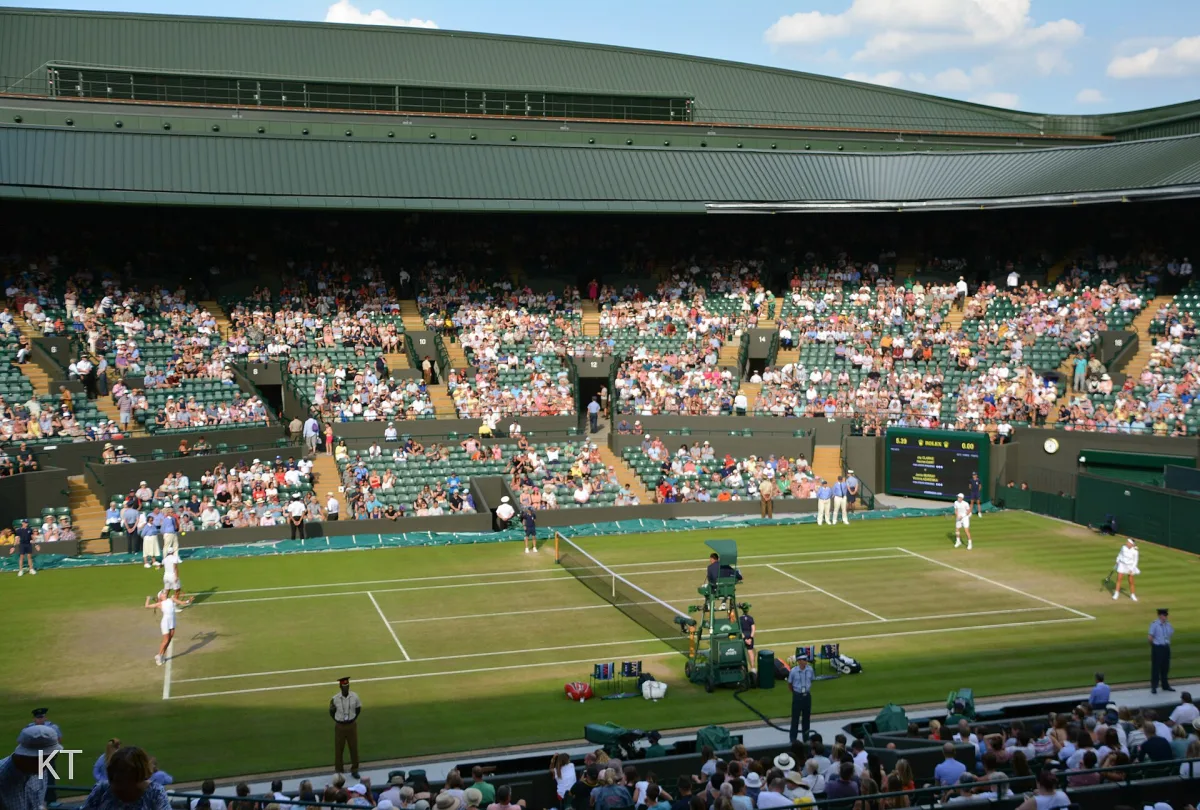
After a service let, repeat the serve you were taking: a first serve stays a first serve, and a second serve stays a second serve. If a let interrupts the rally, you restart the whole point with a first serve. ITF rules 22 and 23 make that distinction.
These examples use standard service-let rules. Some competitions use the approved no-let alternative, where an otherwise good serve that touches the net stays in play. Check the format before you start.
The serve clips the net: let or fault?
A serve that touches the net and lands in the correct service box is a let. Take that serve again. If it touches the net but lands outside the correct box, it is a fault. The USTA serving guide explains both outcomes.
Say you are serving at 30-15. Your first serve goes long. The second clips the tape and lands in the correct box. It is still 30-15, and you are still on a second serve. If the next attempt clips the tape and goes out, you have double-faulted. The earlier let did not give you a fresh first serve.
A ball interrupts the rally
Your second serve lands in, the rally begins, and a ball rolls over from the next court. A let is called. Under ITF rule 23, you replay the whole point with a first serve, even though you had already served a fault before the rally began.
At 30-15, that means starting again at 30-15 with two service chances. Nobody gets a point for the unfinished rally.
A ball arrives between first and second serves
You do not automatically get a first serve because you paused to clear a ball. In matches using USTA's The Code, a brief pause between serves leaves you on the second serve. The USTA's explanation separates that pause from an interruption during your service motion:
- You quickly remove the ball while preparing to serve: take your second serve.
- The ball interrupts your second-service motion: restart with two serves, beginning with a first serve.
- Removing it causes a sufficiently prolonged interruption: two serves may be justified. Code 30 gives the receiver the decision on whether that ball-clearing delay was long enough.
When you discuss the call, ask whether you briefly cleared the ball between serves, it interrupted the service motion, or a let stopped the rally. Use the matching example above to decide how to resume.
Who can call the service let?
In an unofficiated match using USTA's The Code, section 27, any player can call a service let. Call before the return goes out of play or the server or their partner hits it. A let on an apparent or near ace needs a prompt call.
For a ball entering the court during play, Code 18 says to call the let as soon as you notice it. You lose the right to claim it if you delay unreasonably. Do not wait to see whether your shot lands in.
Service lets and fault calls have different rules. Our guide to calling your own first serve out covers who can call a fault. For the return after a replay, see the tennis return strategy guide.
Your next match
Ready to improve your game?
Download Racketly for iOS, Apple Watch or Android and start tracking your matches today.
Choose your Racketly download or read the match tracking guide.